How to Build a Safe Leaf Pile for Kids (Without the Hidden Surprises)

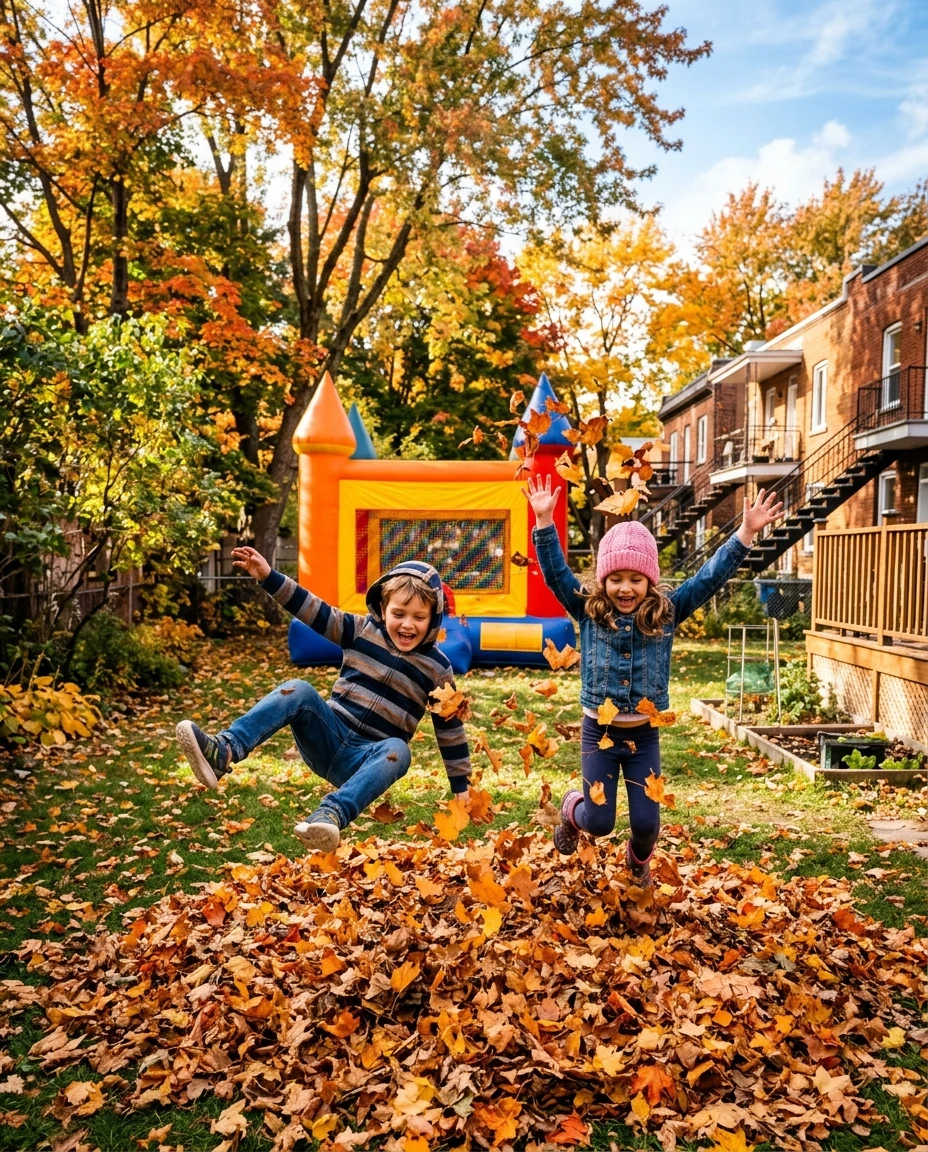
Every fall I get the same request from parents booking an October party: can we do the bouncy castle and let the kids jump in the leaves too? Of course we can. It's one of the best combos out there, a crisp afternoon, a big crunchy pile in the corner of the yard, kids running back and forth between it and the inflatable until someone's mom calls everyone in for cake. I genuinely love setting up for these parties.
But here's what I tell every parent who asks: a leaf pile isn't harmless just because it's made of leaves. I've pulled rakes out of piles two minutes before a five-year-old was about to dive in. I've seen a pile that looked perfectly dry turn out to be soaked and compacted underneath, basically a wet mat with a crunchy top layer, which is a great way for a kid to land wrong and get hurt. Leaves are natural. That doesn't make them safe. Treat a leaf pile exactly the way we treat an inflatable before a party starts: inspect it, supervise it, and take it down once the fun is over.
Why "set it and forget it" is the real risk
Most backyard injuries and gross surprises don't come from the pile itself, they come from the pile that's been sitting there for a week. A fresh pile built right before the kids arrive is one thing. A pile that's been rained on, sat under a tree for ten days, and started composting underneath is a completely different animal. Wet, matted leaves lose their cushioning fast, and they turn into an excellent hiding spot for things you don't want anywhere near a four-year-old's face. Spiders, beetles, the occasional garter snake, and ticks all find old leaf piles appealing for the same reason kids do: it's warm, dark, and sheltered. If you want the full list of what actually hides in there, FSA Store's rundown is worth a quick read, but the short version is simple: build it close to playtime, not days ahead, and do a tick check once the kids come out.
Mold is the other thing parents don't think about until it's a problem. Damp leaves grow mold quickly, and for a kid with asthma or fall allergies, a few minutes of face-first leaf diving can mean coughing, wheezing, or itchy eyes for the rest of the party. If you've got a guest with known allergies, give their parent a heads up before the pile becomes the main event.
Building the pile right, step by step
Start with the ground, not the leaves. Walk the area first and clear anything hard: rocks, fallen branches, garden stakes, sprinkler heads, dog toys, anything that would hurt if a kid landed on it. It takes two minutes and it's the single most important step. I do a version of this same walkthrough before every inflatable setup, and you'd be amazed what turns up in a yard that looked spotless from the porch.
Pick your spot with some distance in mind. Stay away from the driveway, away from walkways where someone could trip over stray leaves, and well clear of any play structure, deck edge, or fence. If you've got other activities running that day, like an inflatable or a carnival game station, give the leaf pile its own lane so kids running toward it aren't cutting across someone mid-bounce. The same thinking that goes into picking the right size and placement for a bounce house applies here too: give each activity its own footprint so nobody's colliding between zones.
Rake it into a loose mound, not a packed one. A pile that's been stomped down or rained on loses its give, and a kid landing on compacted wet leaves is basically landing on dirt. Keep it loose and let it breathe. Depth matters more than width, you want enough cushion that a kid jumping in from a short run doesn't hit the ground through the leaves, but you don't need a mountain. Big enough for one kid to disappear into comfortably is plenty.
The rules that actually prevent the ER visit
This is the part I'd put right up there with how we brief parents before a bounce house opens. A few rules, said out loud, before the pile becomes the main attraction:
One kid jumps at a time. Piling on is how elbows meet faces and how someone ends up at the bottom of a scrum they can't breathe under.
No diving from anything elevated. A deck railing, a play structure platform, a low tree branch, none of it. Jumping from standing height into a loose pile is fine. Launching off a ledge turns a soft landing into a hard one if the kid overshoots or the pile has settled more than expected.
Never bury a child completely, especially the head. It sounds obvious until you're at a party and the leaf pile becomes a
FAQ
Is it safe to combine a bouncy castle and a leaf pile at the same party?
Yes, it's a great combo, but keep the two activities separated with their own space so kids running toward one aren't colliding with someone mid-bounce on the other.
How old can a leaf pile be before it's unsafe?
Build it close to playtime rather than days ahead. A pile that's sat for a week through rain can get wet and compacted underneath, losing its cushioning and attracting bugs.
What should I check before letting kids jump in?
Clear the ground of rocks, branches, stakes, and other hard objects first, then make sure the pile itself is loose and dry rather than packed down or soaked.
What bugs or critters hide in leaf piles?
Spiders, beetles, garter snakes, and ticks are common, since old piles are warm, dark, and sheltered. Do a tick check on the kids once they come out of the pile.
Should I worry about allergies or asthma?
Yes, damp leaves grow mold quickly, which can trigger coughing, wheezing, or itchy eyes in kids with asthma or fall allergies. Give parents a heads up if their child has known sensitivities.
What are the most important safety rules while kids are playing?
Let only one kid jump at a time, never allow diving from decks or platforms, and never bury a child completely, especially the head.