Best Ideas for Your End-of-Year School Event: Inflatables, Carnival Games, and Animation That Actually Work
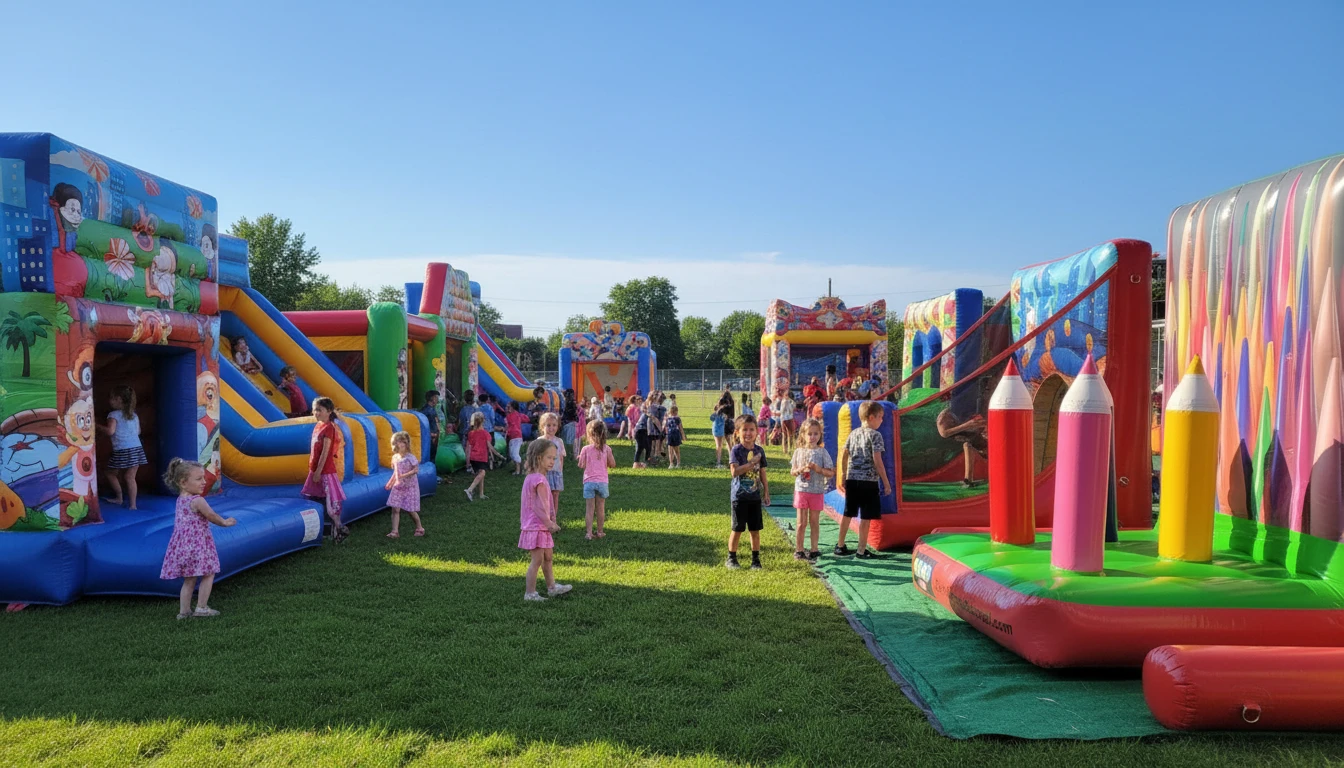
One bounce house is not an end-of-year event. It's a rental.
If you've ever watched 200 students funnel toward a single inflatable while half the school stands around on their phones waiting for a turn, you know exactly what that looks like. The kids at the back of the line lose interest in about four minutes. The teachers spend the whole afternoon managing a crowd instead of enjoying the day. And by 2 PM, the energy has completely flatlined.
The good news: it doesn't have to go that way. With the right mix of activity zones, an end-of-year school event can be the thing students talk about all summer. Here's how to build that lineup.
Why Activity Zones Change Everything
The core idea is simple. Instead of one attraction that creates a bottleneck, you set up multiple stations that students rotate through. High-energy inflatables in one zone. Carnival games in another. Lawn games off to the side for kids who want something a little calmer. Laser tag for the older grades who need real competition.
This approach does three things at once: it keeps wait times short even with large groups, it gives every student something they actually want to do, and it makes the whole event much easier to supervise because kids are naturally spread across the space rather than piled into one corner.
The layout matters too. Separating the loud, high-energy zones from the quieter stations helps teachers manage flow without constantly redirecting students. It also creates a natural rhythm to the day.
Match the Activities to the Age Groups
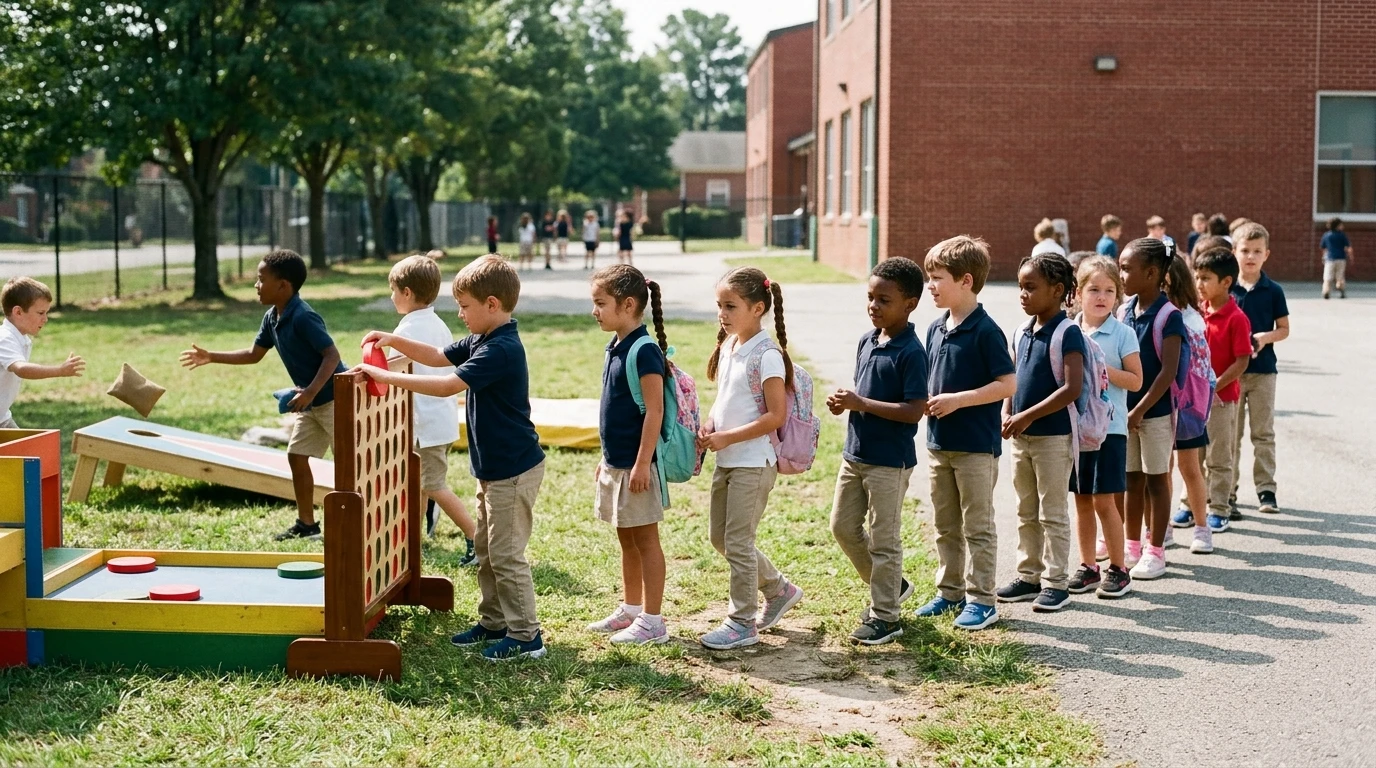
This is where a lot of school events go sideways. A bounce house that thrills a kindergartner is going to get exactly zero interest from a grade 6 student. Building a program that works for the whole school means thinking about what each age group actually wants.
Kindergarten to Grade 2: Bounce houses, smaller obstacle courses, and a duck pond or ring toss carnival game. These kids want to move, they want to feel successful, and they don't need competition to have fun. Keep it colourful, keep it safe, keep it simple.
Grades 3 and 4: Obstacle courses get more interesting here because kids this age love a physical challenge. Carnival games with a bit of skill involved (ball toss, ladder climb) are a hit. Lawn games like giant Jenga or Connect 4 also work well for this group.
Grades 5 and 6: This is where interactive sensor inflatables with live scoreboards come in. Older kids want to compete. They want to see a score. They want bragging rights. Laser tag is also consistently one of the most requested activities for this age group at school events, and for good reason: it's team-based, it burns energy, and it gives students a shared experience that builds real camaraderie.
If your school runs a full-day event with multiple grades cycling through, building your lineup around these age-specific preferences means every student gets at least two or three activities that feel made for them.
The Carnival Games Case
Carnival games are underrated at school events, and here's why they deserve a dedicated zone.
Unlike inflatables, carnival games don't require waiting for a turn in the same way. Students can step up, play, step back, and let the next person go. The rotation is natural and self-managing. For an event with a large number of students, that matters a lot.
They're also social in a way that inflatables aren't. Two kids can go head-to-head at a ring toss. A small group can cheer someone on at a ball toss. The games create little moments of interaction that are genuinely fun to watch and be part of.
For younger grades especially, carnival games are a confidence builder. There's no wrong way to play duck pond. Everyone gets a prize. That's a good feeling on the last day of school.
Lawn Games: Don't Skip the Quiet Zone
Every school has students who don't love high-energy chaos. They're not having less fun, they just have a different idea of what fun looks like. A lawn games zone gives those students a place to belong.
Giant Jenga, oversized Connect 4, ladder toss. These games are easy to pick up, require no prior skill, and naturally draw small groups together. They also give teachers and chaperones a comfortable spot to hang out while keeping an eye on the broader event.
The quiet zone isn't an afterthought. It's part of what makes the event feel complete.
Animation Staff: The Difference Between a Good Event and a Great One
Here's something most coordinators don't think about until the day of: who is actually running all of this?
On-site animation staff do more than supervise. They manage rotations so students move through stations at the right pace. They keep the energy high during competitive games. They handle the small logistical hiccups (a game needs resetting, a line is getting too long, a group of students needs redirecting) before those hiccups become problems for you.
When you have professional animators on site, you get to actually be present at the event instead of spending the whole afternoon troubleshooting. That's a meaningful difference, especially for coordinators who are also teachers trying to enjoy the last day with their students.
If you're planning a larger event with multiple activity zones, animation staff aren't a luxury. They're what makes the whole thing run smoothly.
The Single-Vendor Advantage
One of the most common mistakes school coordinators make is booking inflatables from one company, carnival games from another, and then hunting down a third vendor for animation. The logistics alone are exhausting. Three different arrival windows. Three different setup crews. Three different people to call if something goes wrong.
Booking everything from one vendor simplifies your day considerably. One point of contact. One setup crew that knows how everything fits together. One call if you have a question the morning of the event.
For Montreal-area schools, this is especially relevant because professional vendors who can handle a full lineup of inflatables, carnival games, lawn games, laser tag, and animation are not that common. Finding one you can trust and sticking with them year after year is genuinely worth it.
The planning tips in our stress-free party planning guide for large groups apply here too: the right game mix, thoughtfully laid out, takes the pressure off everyone.
Book Early. Seriously.
End-of-year school events in the Montreal area happen in a very tight window: early June to mid-June, before the Saint-Jean-Baptiste holiday on June 24th. Every school in the region is competing for the same dates.
Vendors who offer commercial-grade equipment and professional animation fill up fast. If you're planning an event for early June, reaching out in January or February is not too early. March is fine. April starts to get risky for the best dates. May is a gamble.
Commercial-grade inflatables matter for school events specifically because they're built to handle continuous use by large groups over a full day. Residential-grade units are not designed for that kind of volume. The difference shows up in durability, safety, and how the equipment looks by the end of the afternoon.
If you've worked with a vendor before and they delivered, lock in your date early. If you're looking for someone new, start the conversation now rather than waiting until the spring rush.
What a Full Lineup Actually Looks Like
To make this concrete: a well-structured end-of-year event for a school with multiple grades might include an obstacle course inflatable and a bounce house for the younger grades, a sensor-based interactive inflatable with a scoreboard for the older kids, three or four carnival game stations spread across a central area, a lawn games corner with giant versions of classic games, laser tag for grades 5 and up, and two or three animators managing the whole thing.
That's not an overwhelming setup. It's a thoughtful one. Each element serves a purpose. Each age group has something to look forward to. And the animators make sure the whole day flows the way it's supposed to.
For ideas on how to anchor an event around one or two key inflatables without overcomplicating things, the approach we describe in our guide to stress-free kids' party planning translates well to the school context too.
The last day of school is a big deal for kids. It's the moment they carry into summer. Getting the entertainment right isn't about going over the top. It's about giving students an afternoon that actually feels like a celebration. That's worth planning for.
Ready to build your lineup? Get in touch with Cool Games for a quote on your school's end-of-year event. We serve schools across the West Island and greater Montreal area, and we're happy to help you figure out exactly what works for your space, your student count, and your budget.
FAQ
Why should we rent from one vendor instead of booking inflatables, games, and animation separately?
Using a single vendor means one setup crew, one point of contact, and one call if anything goes wrong on the day of the event. Managing three different companies with three different arrival windows adds stress that you really don't need.
How early do we need to book for an early June school event in Montreal?
Reaching out in January or February is not too early, and March is still fine. By April the best dates start to disappear, and booking in May is a real gamble given how tight the end-of-year window is.
What activities work best for older students like grades 5 and 6?
Older kids want competition and bragging rights, so interactive sensor inflatables with live scoreboards and laser tag are consistently the strongest choices for that age group. Both are team-based and give students a shared experience they actually talk about afterward.
Do carnival games really work for large groups, or do they create the same bottleneck problem as a single bounce house?
Carnival games are naturally self-managing because students step up, play, and move on without a formal lineup. That built-in rotation makes them a smart addition when you have a large number of students moving through the event.
What is a quiet zone and why does it belong at a school event?
A lawn games zone with options like giant Jenga or oversized Connect 4 gives students who prefer a calmer experience a place where they genuinely fit in. It also gives teachers and chaperones a comfortable spot to stay present without being in the middle of the high-energy zones.
Do we really need professional animation staff if we already have teachers and chaperones on site?
Animators do more than supervise: they manage rotations, keep energy up during competitive games, and handle small logistical problems before those problems land on you. Having them on site means coordinators and teachers can actually enjoy the day instead of troubleshooting it.